Tech
Baidu Launches Apollo World to Simulate 100,000 km of Robotaxi Driving a Day
China's Baidu has launched Apollo World, an AI system that simulates real-world driving environments to train robotaxis, generating up to 100,000 km of simulated driving a day — the equivalent of about three years of real-world testing by a safety-driver-equipped vehicle.
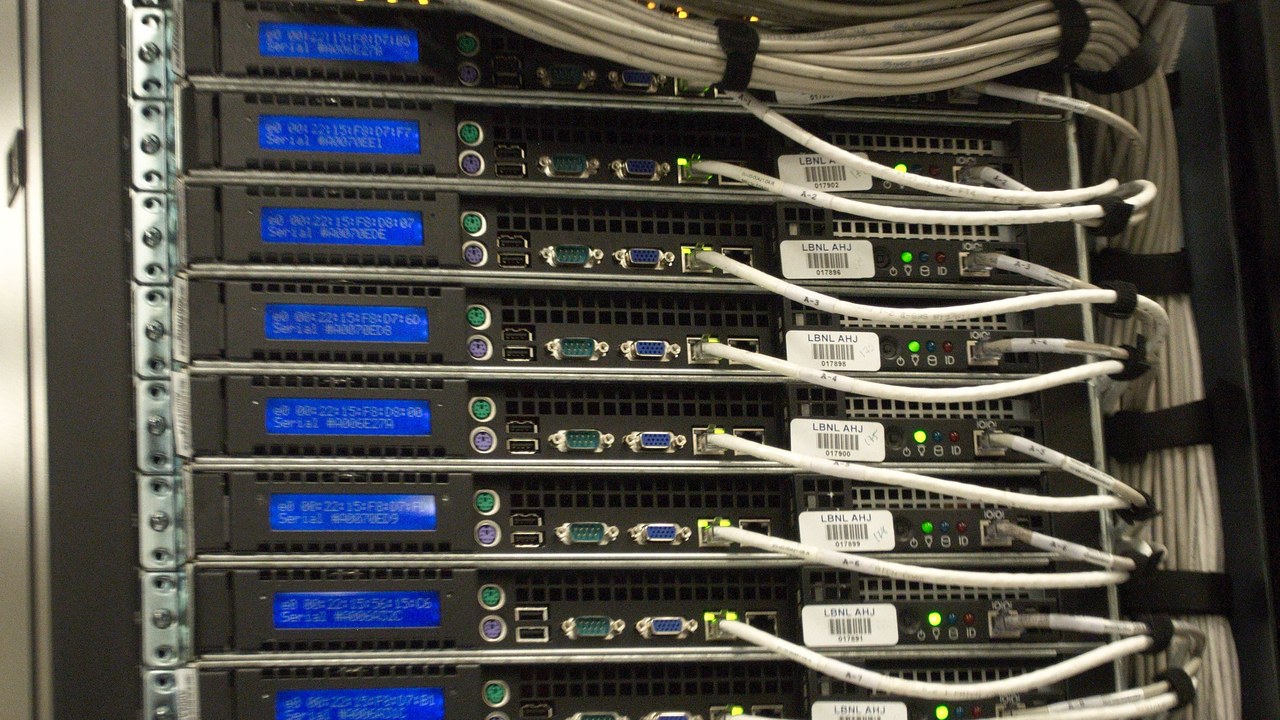
Photo: NERSC / Wikimedia Commons (CC0). Photo shows server racks in a data centre, not a Baidu robotaxi.
China's Baidu launched Apollo World on Tuesday, an AI system designed to simulate real-world environments for training robotaxis and predict how they evolve, as automakers race to cut the cost of developing autonomous vehicles.
Apollo World can generate "up to 100,000 km" (62,000 miles) of simulated driving daily, equivalent to about three years of real-world testing by a safety-driver-equipped autonomous vehicle, Baidu said. The system is capable of producing real-time multimodal data streams, such as camera and lidar observations, enabling self-driving systems to directly sense and navigate simulated environments.
Baidu said Apollo World is already being used for training Apollo Go's robotaxi fleet to be operated globally. Baidu-owned Apollo Go is China's largest robotaxi service operator and competes with rivals such as WeRide, Pony.ai and Momenta Global.
Volkswagen's Chinese partner XPeng also plans to launch robotaxi operations in 2027. Morgan Stanley has estimated China's robotaxi fleet could grow to 1 million vehicles by 2035.
Chinese robotaxi firms have largely pursued asset-light expansion strategies, supplying autonomous-driving technology and partnering with automakers, ride-hailing platforms and local fleet operators overseas rather than bearing the full cost of owning and operating fleets. But developing the technology itself remains expensive.
"They still have the capex of training models ... and vehicles, a challenge that every autonomous vehicle company is going to face," said Frank McCleary, an expert in autonomous mobility and urban transportation at management consulting firm Arthur D. Little. "The speed at which you can launch comes down to your technology's ability to adapt and understand and learn (how to drive in) that environment," he said, adding AI has helped accelerate advances in autonomous driving.
Tesla, which is seeking to expand its Cybercab robotaxi fleet, uses an "end-to-end neural network" trained on video of human driving to develop its self-driving technology.
Source: Reuters
Read Also
- Marvell to Buy Lumentum in $115 Billion Deal in AI Data-Centre Bet — Tech
- OpenAI Cuts Funding Target by $10 Billion to $20 Billion, FT Reports — Tech
- Meta Launches Up to $95 Billion Equity Raise to Fund AI Expansion — Tech
Pawartaenggal Newsroom